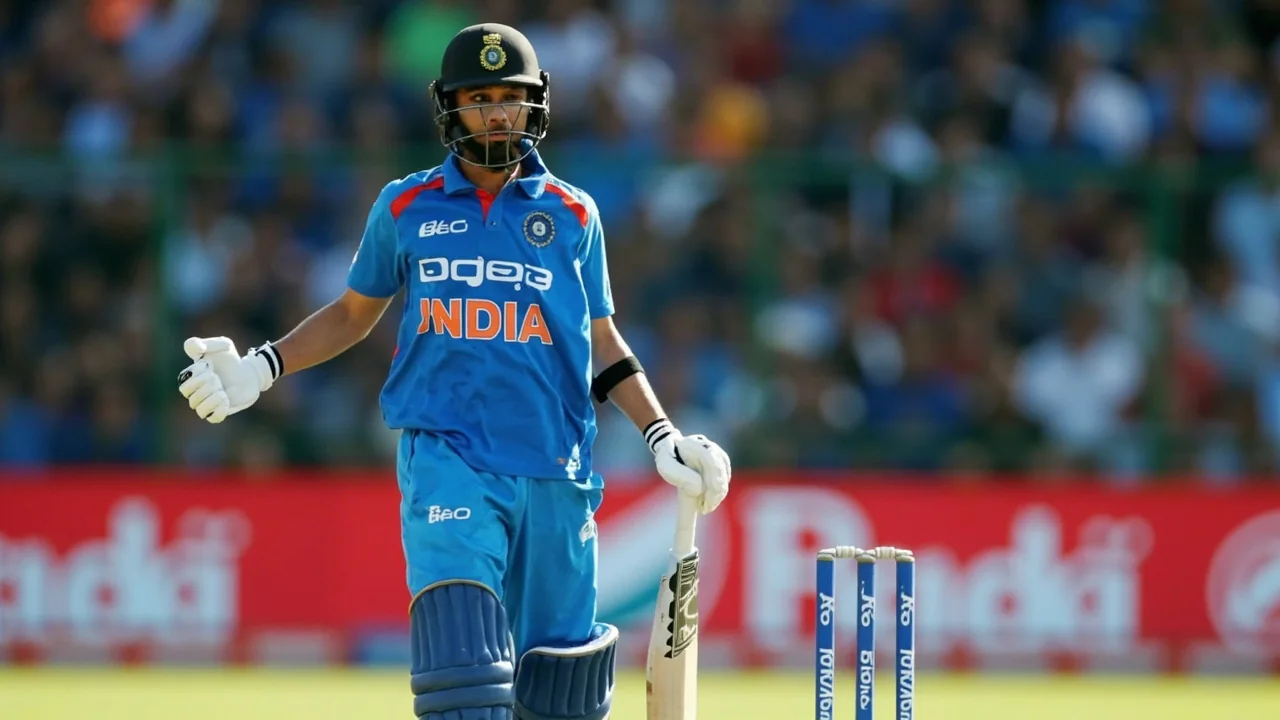
India T20I opener Abhishek Sharma tore into a Tarn Taran attack in the Punjab State Inter District Senior One Day tournament on Sunday 2 August 2026, racing to 233 off 91 balls with 25 sixes and 15 fours — seven days after an 11-run three-innings tour of Zimbabwe.
· LeoVegas India Editorial Desk · Live Matches
Abhishek Sharma's Sunday afternoon in Amritsar was the loudest answer a domestic fifty-over innings can give to a quiet international week. Playing for Amritsar against Tarn Taran in the Punjab State Inter District Senior One Day tournament, the India T20I opener finished on 233 runs off 91 balls with a strike rate of 256.04, depositing the ball over the rope 25 times and threading 15 fours. The stand he built with Abhay Choudhary (93 off 85) reached 305 before the second opener holed out, and Amritsar itself went on to post 533 for 8 in their 50 overs. Abhinav Sharma added 51 lower in the order to keep the lower-middle order moving while the openers were still going.
Numbers of that scale are ordinary in a Twenty20 league, but they are rare in a 50-over domestic game on a provincial ground, and they arrived exactly seven days after the India T20I tour of Zimbabwe ended with Abhishek managing 11 runs across three innings in a series India still won 3-0. The contrast between the two weekends is why the knock is sitting on every cricket desk in the country. Domestic volume cannot, by itself, settle questions about international form. It can, however, remind anyone watching that the first innings of a series rarely finishes a player's story.
The most useful way to read Abhishek Sharma's Sunday is in two layers. The headline layer is the strike rate, the boundary count and the partnership with Choudhary — the visible evidence that the ball-striking method has not gone anywhere. The second layer is the context: a Srikkanth-led reality check from the same week, fifteen-year-old Vaibhav Sooryavanshi walking away with the Player of the Series award from Zimbabwe, and a T20 World Cup bracket that began with three consecutive ducks for the same Abhishek against the United States, Pakistan and the Netherlands. Neither layer cancels the other. They explain why the Amritsar innings has been treated as a reminder rather than a verdict.
Two hundred and thirty-three runs off 91 balls in a 50-over game is the kind of figure that does not parse until the boundary count is broken down. Twenty-five sixes and 15 fours mean 40 of his 91 scoring balls went over the infield, well over forty percent boundary contact. The remaining 51 balls were either dots, singles or twos, which still adds 33 boundary-free runs and a strike rate comfortably above two-fifty. The innings tempo was not a single collapse of clean hitting; it was clean hitting layered over a steady running game that kept the strike moving whenever Choudhary was the quieter partner.
Choudhary's role matters for the read. A 93 off 85 at the other end is not a passive occupation; it is a senior partner rotating strike, pinning the field, and letting Abhishek take the bowling back to the boundary. Together the pair added 305 for the first wicket — a stand longer than most Inter District first-wicket records for that level, and long enough to set Amritsar up to bat the full 50 overs even after the platform was set. The middle order, including Abhinav Sharma's 51, simply turned the platform into a total.
Amritsar finished on 533 for 8 in 50 overs. That total is unanswerable in any domestic format, but the more interesting footnote is how they got there: 305 runs from the openers, 228 from the rest of the order. The batting depth was not stressed by the early tempo, which says as much about the second-wicket and middle-order calm as it does about the opening partnership. In a tournament often decided by net run rate and one bad collapse, an innings like this tends to win the day before the third ball of the chase is bowled.
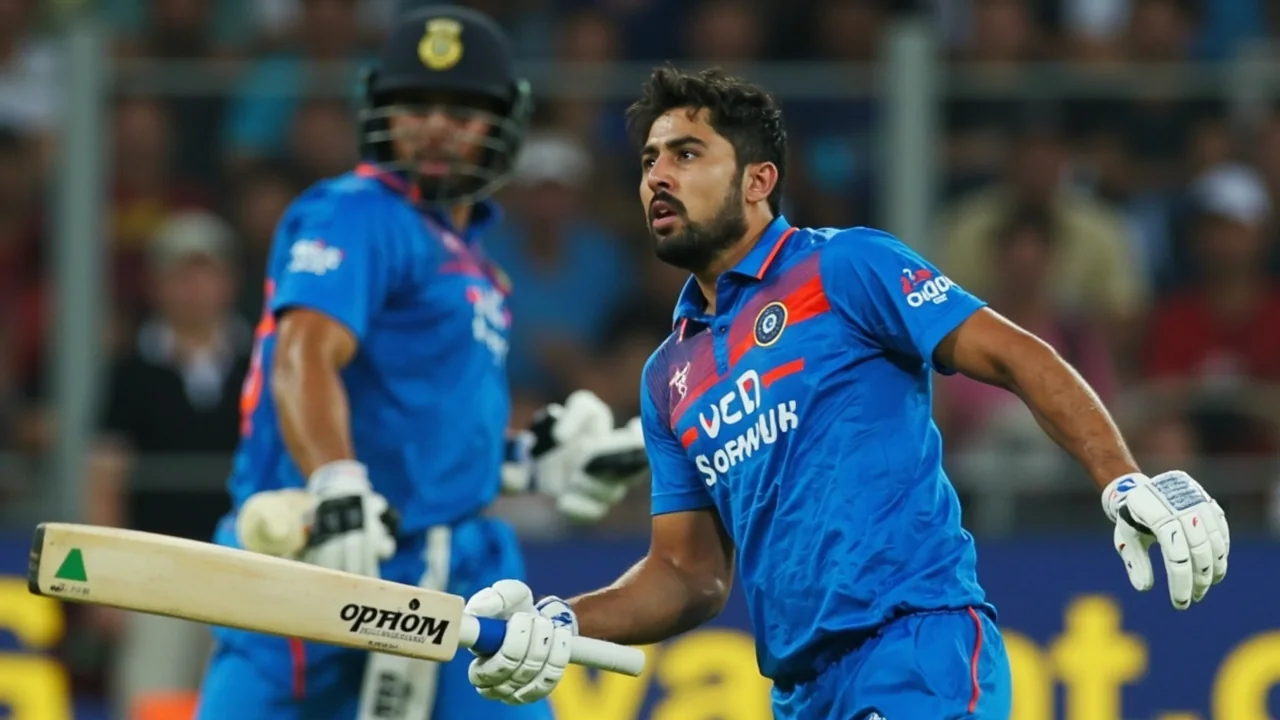
India's T20I tour of Zimbabwe finished with a 3-0 series win, and the headline that travelled farthest was not the result. It was the leading run-scorer: fifteen-year-old Vaibhav Sooryavanshi, whose 151 runs at a strike rate of 196.10 made him the youngest player-of-the-series in an India T20I assignment and the first man to score more than one T20I half-century before turning sixteen. The teenager's series was the counterweight to Abhishek's 11 runs across three innings. Both facts belong to the same tour file.
Abhishek's Zimbabwe tour was not a complete collapse. He was entrusted with the opener's role and given a defined partnership with Sooryavanshi in at least one of the three games. The numbers, however, were thin enough to draw an obvious reading from former India captain Kris Srikkanth, who said on his YouTube channel after the series that Abhishek has been worked out by opposition bowlers and that Sanju Samson deserves another chance at the top of the order. Srikkanth has been both selector and national selector across his career, and his remarks carried the weight of a professional opinion, not a troll take. His argument was that the bowling plans had caught up with Abhishek's tempo, and that rotating the top three was a more honest team response than persisting with a frozen combination.
Sooryavanshi's series, by contrast, was the kind of breakout that compresses several career stages into one week. Three innings, two fifty-plus scores, and a player-of-the-series award at fifteen. The historical note attached to the award — first man to score more than one T20I half-century before turning sixteen — is not a marketing line. It places him in a slice of all-time T20I history that selectors and administrators read when they decide how to protect a young player through a vulnerable phase. The issue with Sooryavanshi is not whether he plays; it is how the team room treats him when the form dips. That is the same management question Abhishek is now trying to answer with his bat.
Step back from one Sunday and the 2026 ledger for Abhishek Sharma is mixed. Across 23 T20Is in the calendar year, he has been dismissed for six ducks, posted fifteen scores under 20, and passed fifty on five occasions. The brutal sequence at the 2026 T20 World Cup — three consecutive ducks against the United States, Pakistan and the Netherlands — stands out because it was the first time an India batter had been dismissed for nought three times in a single edition of the tournament. He finished the World Cup with an average of 17.62, a number that does not argue for automatic retention in the shortest format's top three.
That record does not need to be excused; it is the starting point for any fair read of the Amritsar innings. Twenty-five sixes and 15 fours in a domestic fifty-over game do not erase six ducks in international cricket, and they do not solve the tactical question Srikkanth raised. What they do show is that the underlying ball-striking method has not been lost. The bat speed, the lofted drives over extra cover, the ability to clear the rope against pace and spin — all of that was visible on Sunday and has been visible in flashes across the year. The conversation is about pattern recognition, not about whether Abhishek can hit a cricket ball.
There is also a cricket literature on players who average in the teens in Tests and thirties in ODIs, and whose T20I dot-ball percentage stays stubbornly high when the bowling plans are fresh. Abhishek fits that pattern in 2026. The plans have been sharper, the dots have piled up, and the boundary percentage has dropped in the international phase. A domestic innings of 233 does not, on its own, change any of that. It does, however, remind the player and the dressing room that the off-side driving has not deserted him, and that the bowlers who have started to read him will get a different reading again the next time he walks out.
Reading the Srikkanth remarks a second time, the weight sits on the second half of the sentence. The first half — that Abhishek has been worked out by opposition bowlers — is a claim that any analyst can defend with field-placement data and dot-ball percentages. The second half — that Sanju Samson deserves another chance at the top of the order — is the harder one. It asks the selectors to reopen a slot that Abhishek has held for most of the year, on the working belief that the current method has run its course.
Samson's case as a top-order option is not built on T20I volume alone. He is a multi-format player who has been in and out of the white-ball side without ever holding a settled role for more than a short stretch. Srikkanth's argument is that Samson offers a different shape at the top: a right-hander who can anchor a powerplay without leaning on boundary hitting, and who has scored heavily in domestic and IPL middle-order roles. The case against the case is equally serious: Samson's own T20I numbers have not been consistently dominant, and Abhishek is a left-handed option who gives the captain a left-right combination at the top. Swapping the pair is not a neutral move.
For Abhishek, the Srikkanth comment is a prompt to treat the calendar year as a marathon, not a sprint. The next stretch of white-ball cricket is the Asian Games men's cricket tournament in Aichi-Nagoya, scheduled for 24 September to 1 October 2026, where India are seeded into the quarter-finals. The Asian Games format compresses fixtures into a shorter window, which tends to expose unsettled top orders faster than bilateral tours. The squad selection for that event will be a cleaner test of the Srikkanth argument than any individual domestic innings, because the bowlers will be Asian Games-class and the read options will be sharper.
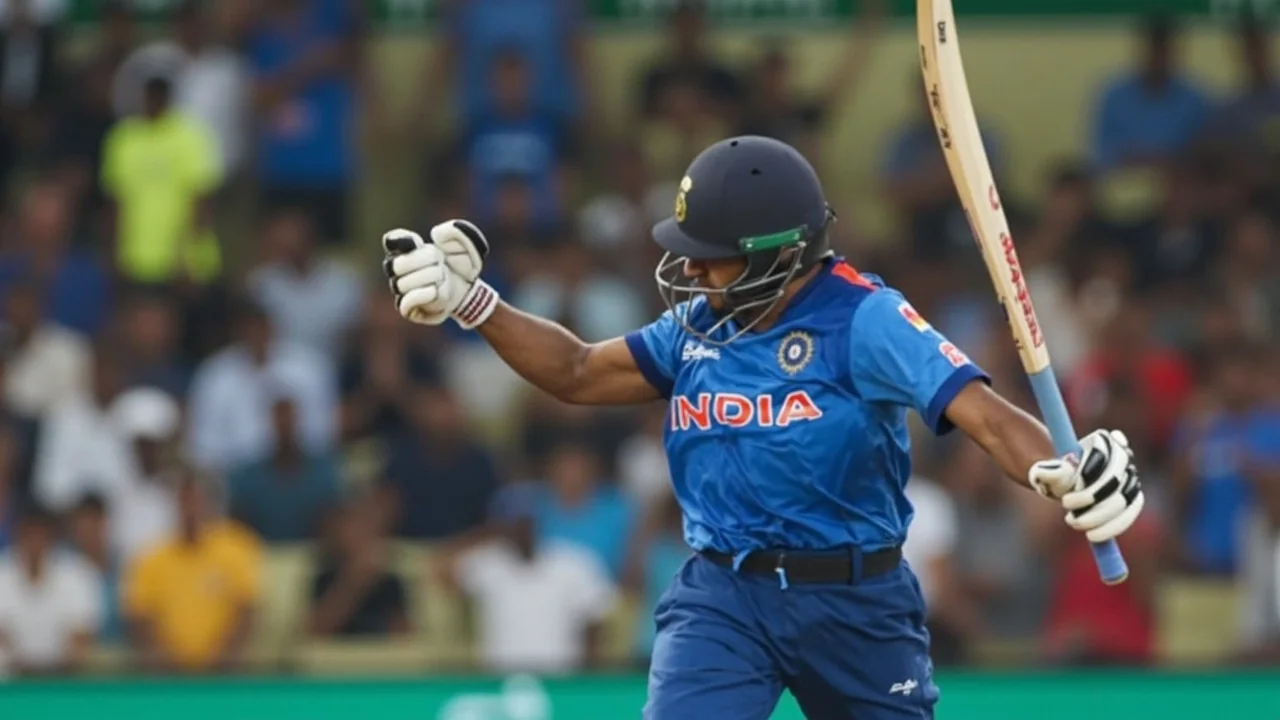
The Punjab State Inter District tournament does not play in a vacuum. Amritsar's remaining fixtures will offer a quieter study of how Abhishek handles the second match after a 233, the more difficult surfaces, and the inevitable bowling adjustments after Sunday's show. The relevant questions are not whether he can repeat the 233. They are whether the technique holds under conditions where the bowling has been planned for him, where the captain at the other end has been swapped, and where the run rate expectation is normal rather than explosive.
Domestic cricket gives a player one thing that international cricket rarely does: a sample of three or four consecutive matches against the same pool of bowlers. International teams rotate opposition constantly, and the read time is too short for a top-order batter to make adjustments. In a district tournament, the bowlers see the same batter twice in a week. That is the cleanest re-entry test available. If Abhishek averages 80-plus across the next three or four innings without a fifty off fewer than 60 balls, the Sunday knock will start to look like the start of a correction rather than a one-off statement.
There is also a quieter point about strike rotation. The 25-sixes-and-15-fours breakdown is genuine, but the strike rate of 256.04 also means almost every other scoring ball produced a single or a two. Hitting sixes at that rate is a skill that travels across formats; running hard between the wickets is a habit that travels further. The Punjab state games will show whether the running element of Sunday's innings was a feature of the partnership with Choudhary or a feature of Abhishek's own game. The latter is the more impressive answer.
Selection rooms rarely wait for a single innings. The India T20I top-order reads three matches into the next assignment, and the dressing room conversation is usually broader than the public one. By the time the Asian Games squad is finalised, the selectors will have the Asian Games conditions, the National Cricket Academy workload data, and the player-by-player form markers from the domestic circuit. The Punjab Inter District tournament is one piece of that picture, not a referendum on the Srikkanth argument.
That is also the reason Abel Sharma's century-plus Sunday is being reported as both fact and conversation. The fact is the innings, the strike rate, the partnership, and the team total. The conversation is whether the same batter can produce clean, risk-managed scores in the international phase when the bowling plans are sharper and the dot-ball pressure is denser. Public commentary will lean on whichever number suits the season's narrative. The dressing room will lean on the one that matters for the next set of opposition.
For the moment, the cleanest summary is the one the scorebook already wrote. A 233 off 91 balls, 25 sixes and 15 fours, a 305-run opening stand, a 533 for 8 team total, and a week that included an 11-run Zimbabwe series and a public call from Kris Srikkanth to bring Sanju Samson back into the top three. The seven days frame the innings in a way no press release could. Read them together, and the Amritsar knock is not a contradiction; it is a reminder that the story is still being written.
The most useful next checkpoints are observable. Will Abhishek Sharma be picked in Amritsar's next Inter District fixture, and against which opposition? Will the bowling captain set a different field on the back of Sunday? Does the second innings of the week reach another fifty-plus total, or does it drift into a quieter 30-ball 40? Those questions are answerable inside a fortnight, and they will say more about the international read than any touring squad speculation.
Secondary signals sit with the senior India group. The BCCI has not yet released a media statement on the Srikkanth remarks, and the head coach has not been quoted on the Samson case since the Zimbabwe series ended. Silence is not unusual in selection cycles, but it leaves the room open for the next official announcement to set the tone. Asian Games cricket squads are typically confirmed a few weeks before the start date, which means the public window for commentary will close before the squad is named.
Look also at the T20I calendar after the Asian Games. India are seeded into the quarter-finals in Aichi-Nagoya, and the Super 8 stage of the World Cup cycle is not far behind. The between-tournament window is exactly the time when domestic performances are read with the most weight. Abhishek Sharma's Sunday, in that frame, is the start of a quiet audition for the next call-up sheet. Whether the audition continues is the next storyline worth following.
For shorter-term fans, the practical reading is straightforward. The Indian domestic season is in full swing, the Inter District tournament is producing surprise totals, and the international window is reopening. Match-by-match notes from the Punjab state games, the Indian Premier League build-up, and the Asian Games build-up will continue through the LeoVegas India live match coverage at live matches as the rest of the season unfolds.
He scored 233 runs off 91 balls with a strike rate of 256.04, hitting 25 sixes and 15 fours for Amritsar against Tarn Taran on Sunday 2 August 2026.
He had just played the India T20I tour of Zimbabwe, finishing with only 11 runs across three innings during a 3-0 series win in late July 2026.
Abhay Choudhary opened with him and made 93 off 85 balls, sharing a 305-run opening stand before Choudhary was dismissed.
He has played 23 T20Is in 2026 with six ducks, 15 scores under 20, and five fifty-plus scores. He began the 2026 T20 World Cup with three consecutive ducks against the United States, Pakistan and the Netherlands, the first India batter dismissed for nought three times in a single edition.
Fifteen-year-old Vaibhav Sooryavanshi finished the series with 151 runs at a strike rate of 196.10, won the player-of-the-series award and became the first man to score more than one T20I half-century before turning 16.
Speaking on his YouTube channel, former India captain Kris Srikkanth said Abhishek has been worked out by opposition bowlers and that Sanju Samson deserves another chance at the top of the order.
India men are seeded into the quarter-finals of the Asian Games cricket tournament in Aichi-Nagoya, scheduled for 24 September to 1 October 2026.
Use confirmed XIs, role notes and series schedule updates before you lock any match-day decisions. Keep an entertainment-only budget and check eligibility where you live.
