Zimbabwe’s T20I captain says India’s 15-year-old left-hander should not be judged on a handful of early international scores, with a fresh opening role expected when the three-match series begins on Thursday, July 23.
· LeoVegas India Editorial Desk · Cricket News
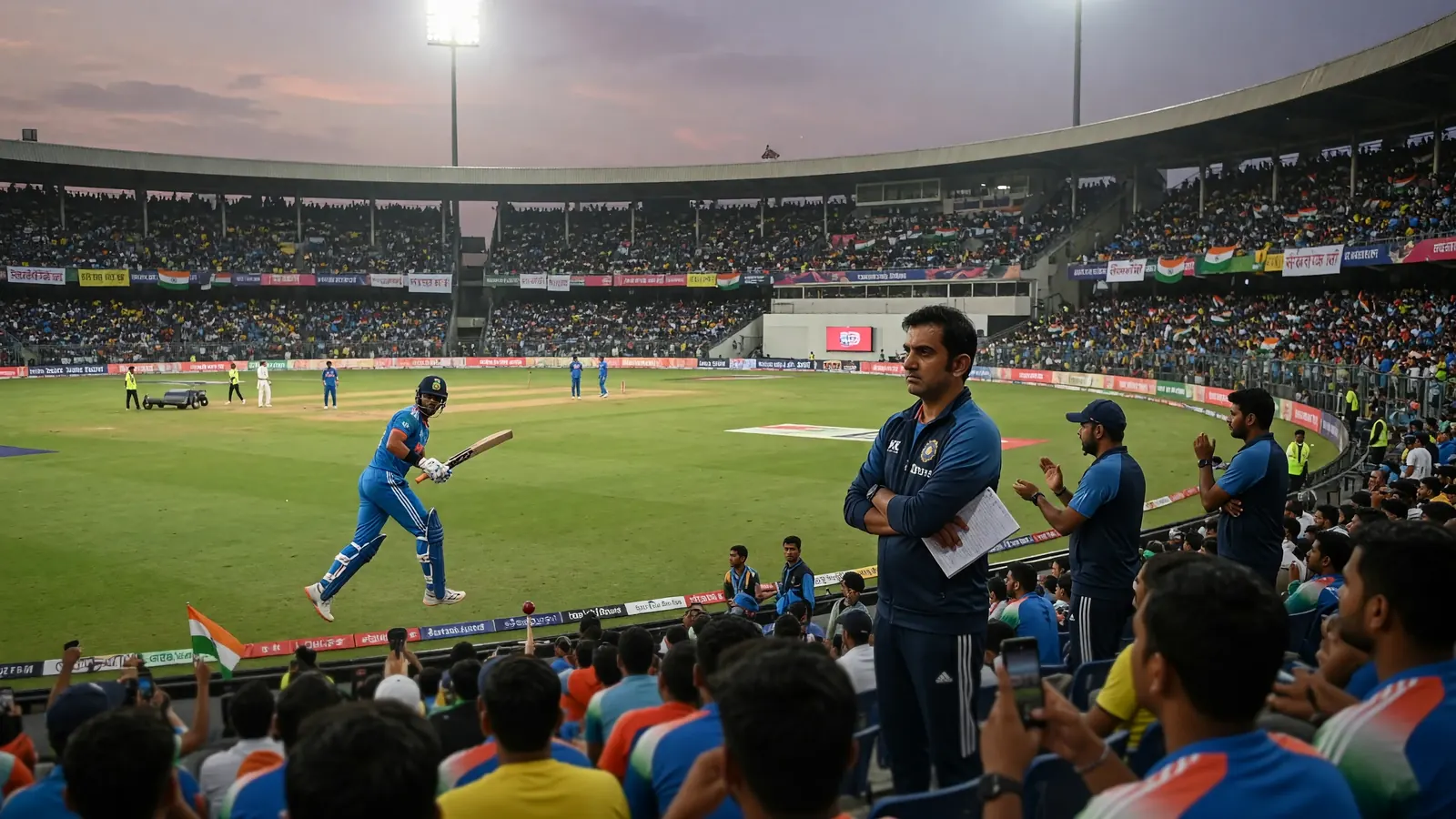
India’s short tour of Zimbabwe arrives with a clear selection subplot: how the team room treats Vaibhav Sooryavanshi after a difficult introduction to senior T20 internationals in England. Zimbabwe captain Sikandar Raza has entered that conversation directly, arguing that a batter still fifteen years old cannot be written up or written off after two or three matches, and that careful handling by the people around him will decide whether exceptional junior form becomes a long international career.
The practical deadline is immediate. The three-match T20I series is scheduled to begin on Thursday, July 23, and Sooryavanshi is expected to open the batting with Abhishek Sharma. Sanju Samson is not in the Zimbabwe touring party, which removes one established top-order option and lengthens the runway for the teenager if the management keeps faith through the first fortnight of the assignment.
Raza’s intervention matters less as a tactical tip for India’s coaches and more as an external calibration of expectation. He has watched the noise that follows early international failure, and he has framed the issue as management rather than talent discovery. The talent, in his telling, is already visible. The variable is how senior players, selectors and the public absorb a learning curve that most internationals are allowed to take later in life.
Speaking on JioStar, Raza called Sooryavanshi a “supremely talented cricketer” and pushed back against snap judgements. His core point was simple: if a fifteen-year-old is already in international cricket, scoring verdicts after a couple of innings are a poor use of evidence. He pointed to the cluster of experienced teammates around the teenager and said that if Sooryavanshi is “managed and handled well,” he “could be a generational talent.”
In a second stretch of the same remarks, Raza stacked the recent résumé rather than the England scores: the previous year’s work, the India Under-19 body of work, and the fact of an international debut at the same young age. “You don’t get to hear such stories nowadays,” he said, before repeating the management theme. “Vaibhav is special. It will be important how he is managed and handled.”
Those lines do not claim a guaranteed trajectory. They draw a boundary around what a fair early sample looks like. For a player rushed into the highest level on the back of junior and franchise dominance, the first senior series often tests composure, scouting attention and bowling plans more than pure ball-striking. Raza’s language treats that transition as a protected phase rather than a final exam.
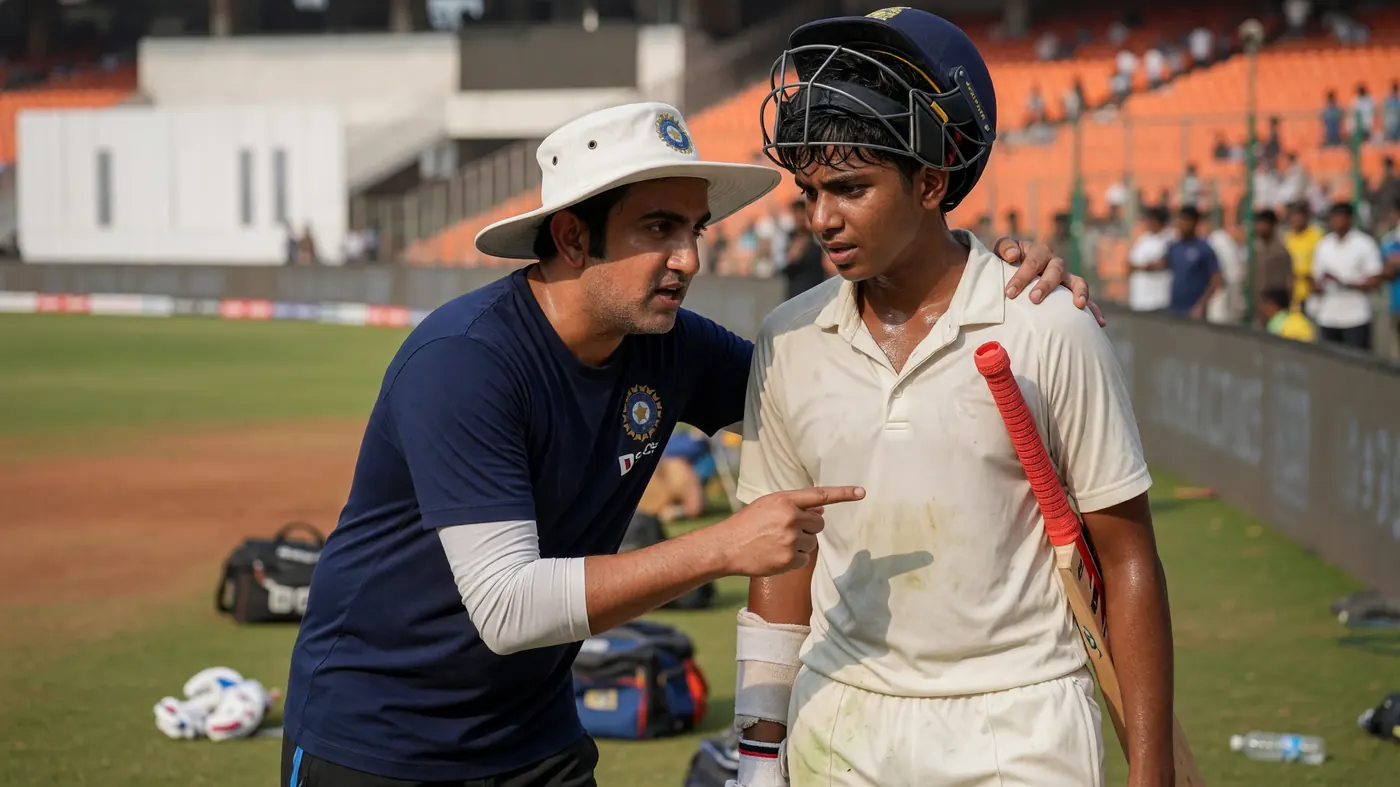
Sooryavanshi’s T20I debut series against England did not mirror his IPL output. Across his first three international appearances he posted successive low scores, and he was left out of the fifth and final match of that assignment. In pure selection terms, that is a standard short-form response to a cold start: shrink the role, protect the dressing-room balance, and revisit the player when the next block of matches offers a cleaner canvas.
In public conversation terms, the same sequence landed harder because of the age and the billing. A fifteen-year-old who arrives with record junior numbers and a heavy franchise tally is not introduced quietly. Each early dismissal becomes a referendum on whether the promotion was premature, whether the method is exposed against international lengths, or whether the supporting cast failed to shield him. Raza’s comments push the discussion back toward process: senior support, workload, role clarity and time.
Nothing in the available remarks invents a technical diagnosis. There is no detailed public claim from Raza about back-lift, option-selection against the new ball, or matchup vulnerability to a specific England bowler. The critique he rejects is chronological — judging a child international on a three-innings scrap — not a ball-by-ball teardown. That distinction keeps the story in the realm of talent management rather than swing mechanics.
Zimbabwe is not a soft reset in the abstract, but it is a different series context from a hard England away stretch. India arrive after a rough white-ball run: T20I series defeats against Ireland and England, followed by an ODI series loss in England. The touring side needs runs and rhythm. At the same time, Samson’s absence from this squad opens a concrete slot at the top of the order rather than a theoretical future chance.
Reporting around the series points to Sooryavanshi opening alongside Abhishek Sharma when the contest begins on July 23. An extended look in that position is the clearest form of “handling” available to a coaching group: repeated exposure in a defined role, with a left-right or tempo partnership that matches how India want to start powerplays. If the experiment is real, the Zimbabwe leg becomes less about a one-night recall and more about a planned sample.
Extended opportunity is not the same thing as a guaranteed free pass. International teams still need results, and a three-match series can turn quickly if early collapses stack up. The difference is informational. Three or more innings at the top, against a single opponent on mostly familiar African surfaces for the home side, give coaches cleaner data than a fragmented debut tour mixed with heavy external noise.
Raza’s patience argument only works because the prior evidence is unusually strong for the age group. Earlier in the year, Sooryavanshi struck 175 from 80 balls against England in the Under-19 World Cup final, a match-shaping innings in India’s title win. He then carried that tempo into the IPL, scoring more than 750 runs and finishing as the tournament’s leading run-scorer.
Those are not vague “promising junior” markers. A double-century-scale under-19 final knock against England and a purple cap–level IPL tally compress several development stages into one season. Selectors who ignored that volume would face a different criticism: blocking a once-in-a-cycle scorer because the international calendar felt awkward. The tension inside Indian cricket is familiar — protect the kid versus pick the form player — and Sooryavanshi’s 2026 pathway forced the second choice sooner than most careers allow.
The jump from under-19 and franchise cricket to full internationals still changes the scouting loop. Bowlers arrive with tighter plans, field placements adjust faster, and the game tempo can swing on one misread length. Raza’s “generational” conditional is an attempt to keep that jump from becoming a personality trial. Talent got the teenager in the room; management, in his framing, decides whether the room helps him stay.
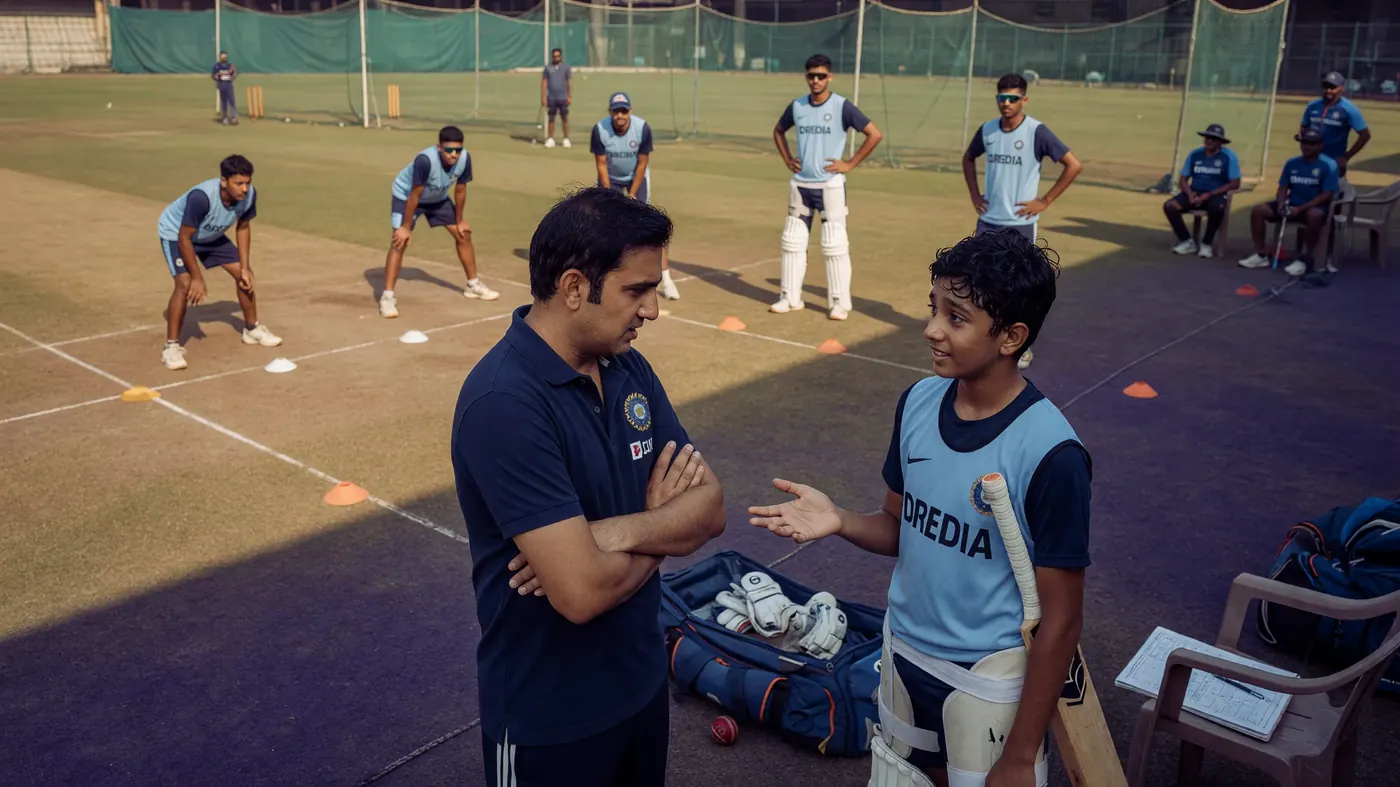
Raza did not publish a checklist for the BCCI or for head coach Gautam Gambhir. Readers should not invent one on his behalf. Still, the phrase “managed and handled well,” repeated across his remarks, points to ordinary high-performance choices that every international setup already debates with young batters.
Role stability is the first. Opening in consecutive matches teaches different lessons from floating between middle-order firefighting and occasional powerplay cameos. Message consistency is the second: a player told he has a series-long look will prepare differently from one who expects a single audition. Senior proximity is the third, and Raza named it explicitly — “a lot of very good senior cricketers around him.” Dressing-room voice, field direction and net priorities often matter as much as a formal coach talk.
Workload sits beside those choices. A fifteen-year-old can handle short-format intensity and still need tighter limits around travel, media load and back-to-back high-adrenaline nights. None of that requires lowering the competitive standard. It requires separating performance review from panic. India’s staff can demand better options against hard lengths while refusing to treat three low scores as a closed file.
Public temperature is harder to control and still part of handling. When a teenager becomes a national headline, every coach decision is read as either stubbornness or surrender. Raza’s comments give the management cover to choose the longer sample without sounding indulgent. Coming from an opposing captain, the note lands as competitive respect rather than domestic public relations.
Raza rejected the idea that India should be priced as overwhelming favourites. He said both countries would have an equal chance and that Zimbabwe’s recent consistency and entertainment value should produce a compelling series. Home conditions, he suggested, give the hosts legitimate reasons for confidence.
That stance fits the wider tour narrative. India are not landing in southern Africa on a winning white-ball streak. Losses in Ireland and England, across T20Is and then ODIs in England, reduce any assumption that reputation alone will flatten Zimbabwe. For Sooryavanshi, a competitive series is double-edged: tougher bowling plans and scoreboard pressure, but also meaningful cricket rather than a low-attention hit-out.
For Zimbabwe, targeting a hyped young opener is an obvious tactical subplot. Early wickets through the new ball would feed the home story Raza is selling — that this side can push India rather than merely share a bill. How India respond if that happens will be the first real-time test of the patience Raza is requesting.
Confirmed facts remain narrow and useful. Sooryavanshi is fifteen, has already debuted in T20Is, struggled for runs in his first three England appearances, missed the final game of that series, and is now expected to open with Abhishek Sharma against Zimbabwe from July 23 while Samson sits out the tour party. Raza has urged patience and careful management, tying any “generational” ceiling to that handling. Zimbabwe’s captain also expects a genuinely contested series on home soil.
What is not confirmed should stay unmarked. There is no public guarantee of Sooryavanshi’s exact minutes across all three T20Is, no formal BCCI statement in the cited remarks announcing a multi-series protection plan, and no technical overhaul attributed to Gambhir inside Raza’s quotes. The headline tension — BCCI and Gambhir being urged to manage the prodigy — is best read as a public call for process, not as evidence of an internal crisis document.
For fantasy and form readers, the actionable piece is role, not mythology. An opening berth alongside Abhishek Sharma changes expected ball face-up and boundary upside compared with a lower-order cameo. Series length matters: a three-match window can still be volatile, especially if conditions or matchups shift. Track confirmed XIs closer to each toss rather than freezing a narrative from the England hangover alone.
Broader series context still belongs on the desk. India’s recent white-ball results, Zimbabwe’s home confidence, and the absence of Samson are selection inputs that sit beside individual aura. Readers who want ongoing match briefs and squad notes can continue through LeoVegas cricket news as the tour develops.
Indian cricket periodically relives the same argument under new names: when does protection become delay, and when does faith become stubbornness? Sooryavanshi forces the argument earlier because his scoring peaks arrived before most players have finished age-group cycles. Raza’s intervention does not settle the policy debate. It restates a professional norm that elite systems claim to follow and sometimes abandon under headline heat.
There is also a bilateral courtesy embedded in the comments. An opposing captain publicly valuing an India teenager’s long-term trajectory softens the series rhetoric without surrendering competitiveness. Raza can demand a hard contest on Thursday and still reject pile-ons after a lean England week. Those positions only contradict each other if every cricket opinion must be either hype or hostility.
For players already inside the India group, the subtext is cultural. Young teammates watch whether a cold series becomes exile or education. Senior voices that keep technical feedback private and selection logic steady tend to produce better second drafts of a talent. That is the management standard Raza is holding up, even if he never sets foot in India’s meeting room.
The cleanest checkpoints are concrete. Does Sooryavanshi start the first T20I on July 23? Is he listed to open with Abhishek Sharma as expected? How many overs does he face against Zimbabwe’s new-ball pair, and does the role hold if the first innings is quiet? Those questions are observable without turning each ball into a career verdict.
Secondary signals sit with the people around him. Field settings when he arrives, the tempo Abhishek adopts at the other end, and whether India retain the pair for the second match after either a surge or a stumble will say more about handling than any pre-series quote. Raza has already supplied the away dressing-room view. The home response will be written in team sheets.
If the series stays competitive as Raza predicts, the teenager’s learning curve will not happen in soft focus. That may be the healthiest version of the test. Hard bowling, clear roles, finite matches, and a public request for patience form a tighter frame than the open-ended noise that followed the England lows. The runs will arrive or they will not; the process is what India’s staff can still choose.
Zimbabwe T20I captain Sikandar Raza, speaking on JioStar, said the fifteen-year-old should not be criticised after only a few international matches and needs to be managed well.
He tied that ceiling to a condition: if Sooryavanshi is handled carefully, with strong senior players around him, Raza believes that level of impact is possible. It was not framed as an automatic outcome.
He made three successive low scores after debuting against England and was omitted from the fifth and final match of that series.
He is expected to open the batting with Abhishek Sharma in the three-match T20I series that begins on Thursday, July 23. Sanju Samson is absent from the Zimbabwe tour squad.
Sooryavanshi scored 175 off 80 balls against England in the Under-19 World Cup final and later made more than 750 IPL runs to finish as the competition’s highest run-getter.
No. He said both sides have an equal chance, highlighted Zimbabwe’s consistent and entertaining cricket, and expected a competitive home series.
India arrive after T20I series losses to Ireland and England and an ODI series defeat in England, context Zimbabwe can use for belief at home.
Raza’s public comments urge management and patience. They do not spell out a formal BCCI or coaching document, timelines, or technical programme.
Use confirmed XIs, role notes and series schedule updates before you lock any match-day decisions. Keep an entertainment-only budget and check eligibility where you live.
